
Android Development Cost
App Pricing Guide
This blog provides comprehensive information on Android App Development Cost and its importance for startups and enterprises. It covers pricing by complexity, regional rates, hidden costs like maintenance and AI integration, and a selection guide. Keep reading to budget smart and choose the right development approach for your business.
If you're planning to build an Android app, one of the first questions you're probably asking is, "How much is this actually going to cost?"
And that's where things usually get frustrating.
Search online, and you'll find estimates ranging anywhere from $20,000 to $300,000 or more. Technically, those numbers can all be right. The problem is that a range that wide doesn't tell you much about what your app might cost.
The reason is simple: not every Android app is built the same way.
A basic MVP with a few screens and a simple backend is a very different project from a marketplace with real-time communication, payments, AI, third-party integrations, and enterprise-level security.
This guide breaks down Android app development cost based on the things that actually affect your budget: app complexity, development team location, technology choices, and engagement model.
We'll also look at something that's often overlooked when planning a budget: mobile app maintenance cost. Building the app is only the beginning. Once it's live, you'll need to keep it secure, compatible, and reliable as Android devices, APIs, and user expectations continue to change.
A professionally developed Android app typically costs between $20,000 and $150,000, while larger enterprise applications can range from $150,000 to $300,000+.
A straightforward MVP may start around $15,000, while a large-scale platform involving AI, real-time infrastructure, complex integrations, and regulatory requirements can go well beyond $500,000.
So, what's the right number for your project? That depends mainly on three things:
How complex the app is
Where your development team is located
How the development team is engaged and structured
Once you understand these three factors, the pricing estimates become much easier to evaluate.
Get a practical development estimate based on your features, technology needs, and business goals. No generic pricing ranges, just a clearer picture of your project.
There isn't one standard price for building an Android app. The basic calculation used by development teams is straightforward:
Total development cost = Development hours × Hourly rate
The number of hours depends largely on the scope and complexity of your app. The hourly rate depends on factors such as the team's location, experience, and structure.
For example, two agencies might quote you $80,000 and $180,000 for what sounds like the same app. That doesn't automatically mean one agency is overcharging.
One team may have estimated 1,000 hours at $80 per hour, while another may have estimated 1,800 hours at $100 per hour because they included more detailed UX work, QA, integrations, security testing, and post-launch support.
That's why looking at the final number alone can be misleading.
When comparing quotes, ask:
How many development hours are included?
What features are covered?
What's included in design and UX?
How much QA and testing is planned?
Are backend and API integrations included?
Is deployment included?
What's included after launch?
The more clearly these questions are answered, the easier it is to understand what you're actually paying for.
When someone searches for Android app development cost, they're usually trying to answer a bigger business question.
If you're still planning: You may simply want to know whether your idea fits your budget or whether you need to raise more capital.
If you're comparing development teams: You may already have a few proposals and want to understand why one company quoted $70,000 while another quoted $200,000.
If you're ready to build: At this stage, the question becomes less about the average market price and more about finding an Android app development company that can turn your requirements into a realistic scope and budget.
There is also a common concern behind almost every pricing conversation: "Am I paying for the right things?"
That's a much better question than simply asking which company has the lowest hourly rate.
App complexity has the biggest impact on the number of hours required to build your product. Here's a practical way to think about the different levels.
Simple applications generally have a limited number of screens, straightforward functionality, and minimal backend requirements.
Examples include:
Utility apps
Content or information apps
Simple calculators and tools
Basic user accounts
Early-stage MVPs
Internal business tools
Development can take around 300 to 500 hours, with a typical timeline of 2 to 4 months.
The goal at this stage is usually to get a working product into users' hands without spending heavily on features that haven't been validated yet.
One thing worth keeping in mind: keeping an MVP small doesn't mean you should build it carelessly. A good MVP should have a solid technical foundation so that you can add features later without rebuilding the entire application.
This is where many startups and growing businesses fall.
These applications often include:
Custom UI/UX
Payment processing
API integrations
Push notifications
Real-time updates
User profiles
Booking or scheduling
E-commerce functionality
Social features
Examples include marketplaces, fitness platforms, booking apps, service platforms, and consumer-facing business applications.
Development generally takes 4 to 8 months, depending on the number of features and integrations. This category can have a surprisingly wide price range.
A booking platform with two integrations might be relatively straightforward. Add multiple payment providers, loyalty programs, multilingual support, real-time communication, analytics, and complex admin workflows, and the project can become significantly more involved.
Enterprise applications are a different level of project altogether.
They may involve:
AI and machine learning
Real-time communication
Multi-tenant architecture
Advanced analytics
Enterprise authentication
Legacy system integrations
Complex APIs
HIPAA, SOC 2, or PCI-DSS requirements
Advanced security controls
Infrastructure designed for millions of users
Banking platforms, telemedicine applications, large marketplaces, logistics platforms, and ride-sharing applications often fall into this category.
These projects can take 9 to 18 months or longer and may require a team of 8 to 15 or more specialists. Interestingly, the core Android application isn't always the hardest part.
Enterprise projects often become expensive because of everything surrounding the app: existing systems, identity providers, third-party APIs, security requirements, compliance, data migration, and extensive testing.
If you're planning an enterprise application, ask your development partner how much time they've allocated to integrations, security, and compliance testing. Those areas can have a major impact on the final budget.
The location of your development team can have a significant impact on your hourly rate.
| Region | Typical Hourly Rate | Common Use Case |
|---|---|---|
| US / Canada | $80 to $200+ | Enterprise, regulated industries, complex products |
| Western Europe | $70 to $150 | Enterprise and mid-to-high complexity products |
| Eastern Europe | $35 to $80 | Strong technical talent and good cost-to-quality ratio |
| India / South Asia | $15 to $50 | Startups, MVPs, and well-defined development projects |
| Southeast Asia | $25 to $55 | Cost-conscious products and growing businesses |
It's tempting to choose a development company based on the lowest hourly rate. But an hourly rate doesn't tell you what the entire project will cost. Imagine one developer charges $25 per hour but needs 1,200 hours to complete the project. Another charges $70 per hour but completes the same work in 500 hours.
The second developer is actually less expensive overall:
$25 × 1,200 = $30,000
$70 × 500 = $35,000
The difference isn't huge, and that's before considering rework, missed deadlines, technical debt, or additional QA. That's why we recommend looking at the overall value and expected outcome, rather than simply comparing hourly rates.
The right question isn't: "Where can I find the cheapest developers?"
It's: "Which team can deliver the product I need at a reasonable total cost and with the
quality I expect?"
Technology choice can also affect your Android app development cost.
For Android development, native technologies such as Kotlin and Jetpack Compose offer excellent performance and deep access to Android capabilities.
Cross-platform frameworks such as Flutter and React Native can allow businesses to share much of their code between Android and iOS.
You need extensive hardware integration
Performance is a major requirement
You're working with advanced camera or sensor functionality
You're building AR or graphics-heavy experiences
Android is your primary platform
You need highly platform-specific functionality
You need both Android and iOS
You want to share a significant portion of the codebase
Your application is primarily business logic and UI driven
You want to launch quickly
You want to keep the development team lean
For many business applications in 2026, cross-platform development can be a practical way to control development costs while still delivering a strong user experience.
Native development still has an important place, especially when performance, hardware access, or platform-specific functionality is central to the product. The best choice depends on what you're building, not simply which technology is currently popular.
We'll help you choose between native and cross-platform development based on your product, performance requirements, timeline, and long-term goals.
A development quote is only useful when you know what's included. A well-structured proposal should normally cover several stages:
Discovery and Planning: Requirements gathering, technical planning, user stories, feature prioritization, architecture planning, and third-party integration planning. Spending time here can prevent expensive changes later.
UI/UX Design: Wireframes, user flows, high-fidelity screens, interactive prototypes, design systems, and usability considerations. For a medium-complexity application, design can often represent $15,000 to $30,000 of the project.
Development: Android application development, backend development, APIs, database work, third-party integrations, authentication, payment systems, and admin functionality.
QA and Testing: Testing across different Android devices, screen sizes, manufacturers, and OS versions to ensure consistent operation.
Deployment and Launch: Google Play Store submission, production configuration, analytics setup, crash monitoring, final testing, and launch support.
Project Management: Coordinating the project, communicating with stakeholders, managing timelines, and keeping development moving.
Getting your application into the Play Store doesn't mean development is finished. Your app will need ongoing maintenance to keep it secure, stable, and compatible with changes in the Android ecosystem. A common budgeting guideline is around 15% to 20% of the original development cost per year.
That can cover:
Bug fixes
Security updates
Android OS compatibility
Performance improvements
Dependency updates
Monitoring
Small feature improvements
Infrastructure and hosting
For example, a $100,000 application could require approximately $15,000 to $20,000 per year in maintenance. Over several years, that becomes a meaningful part of the total cost of ownership. That's why we recommend thinking about your budget as a lifecycle cost rather than simply a development cost.
Instead of asking: "How much will it cost to build my app?"
Also ask: "How much will it cost to build, launch, operate, and maintain my app over the
next three years?"
From development and deployment to updates, security, and ongoing improvements, get a team that can support your app beyond launch.
Compared with the overall development budget, Google Play costs are relatively small, but they're still worth including in your planning.
The standard Google Play developer registration fee is $25 as a one-time payment.
Google also charges service fees on certain purchases and subscriptions made through Google Play. The exact rate depends on the type of transaction and the program your business qualifies for. There isn't a recurring annual developer registration fee like Apple's standard developer membership.
AI has quickly moved from being an interesting add-on to something many businesses expect their apps to offer.
Depending on the product, that could mean:
AI-powered search
Personalized recommendations
AI assistants
Content generation
Document processing
Voice interactions
Image analysis
Predictive analytics
A meaningful AI integration can add roughly $10,000 to $50,000 or more to the development budget.
The AI API itself usually isn't the biggest challenge. The underlying data structure, storage, security, evaluation, monitoring, fallback logic, prompt management, and safeguards account for most of the effort and expense.
Skipping discovery: Trying to save money during planning can create much higher costs later when requirements start changing.
Treating maintenance as optional: An application needs ongoing updates, especially as Android versions, libraries, devices, and security requirements change.
Choosing a developer based only on hourly rate: A lower rate doesn't help if the project takes twice as long or requires significant rework.
Underestimating Android QA: Testing across different devices and OS versions needs to be part of the original budget.
Adding AI without a clear use case: AI should solve a real user or business problem rather than being added simply because it's trending.
The Android app development trends in 2026 are changing how businesses approach product architecture, technology choices, development teams, and long-term app costs:
Kotlin and Jetpack Compose are becoming the standard: Modern Android teams increasingly work with Kotlin and Jetpack Compose rather than relying primarily on older UI approaches.
Cross-platform development is more mature: Flutter and React Native have evolved considerably and offer a practical product strategy when Android and iOS need to launch together.
Development cost differences between regions are changing: Remote hiring has made global talent easier to access, but experienced engineers command competitive rates regardless of geography.
AI is becoming part of the standard product roadmap: AI is increasingly integrated during early architecture design rather than added at the end.
Three main factors will drive development costs over the next 1 to 2 years:
AI integration: Deeper embedding of AI into core architecture even as individual AI service costs decline.
Global development teams: Continued impact of remote hiring on regional pricing structures.
Security and maintenance: Increased focus on security compliance, continuous monitoring, and lifecycle maintenance.
There isn't one fixed answer to the question, "How much does an Android app cost?" The better approach is understanding what drives the numbers.
App complexity determines the required hours. Team experience, location, and structure influence the hourly rate. After launch, maintenance, infrastructure, and ongoing improvements form the total cost of ownership.
Let's turn your vision into reality with our expert Android development team.
Contact UsTell us what you're building, and we'll help you define the right features, technology, timeline, and budget to move forward with confidence.
A startup building a simple MVP will often spend around $15,000 to $50,000. A more complete product with custom UX, integrations, payments, and backend infrastructure can fall closer to $50,000 to $120,000 or more, depending on the scope.
For applications with the same scope, development costs are generally comparable. Android projects can require additional QA because of device and OS fragmentation, while developer rates can vary depending on the market and technology requirements.
Maintenance can include bug fixes, Android OS compatibility updates, security patches, dependency updates, performance improvements, monitoring, and smaller product enhancements. A common budgeting guideline is around 15% to 20% of the original development cost per year.
A freelancer can work well for a small and clearly defined application. If your product involves multiple integrations, complex backend systems, security requirements, ongoing support, or a larger team, an Android app development company can provide more structure and accountability.
A simple application may take 2 to 4 months. Medium-complexity applications often take 4 to 8 months, while enterprise applications can take 9 to 18 months or longer.
It can. A meaningful AI integration may add around $10,000 to $50,000+ depending on what you're building. The cost isn't just the AI API—data infrastructure, integration, testing, security, monitoring, and application logic all contribute to the final budget.

Discover the latest Android App Development Trends 2026, from AI-powered apps and Jetpack Compose to enterprise mobility, security, and performance best practices.

In the ever-evolving mobile app market, monetization strategies play a crucial role in generating revenue while maintaining a seamless user experience.
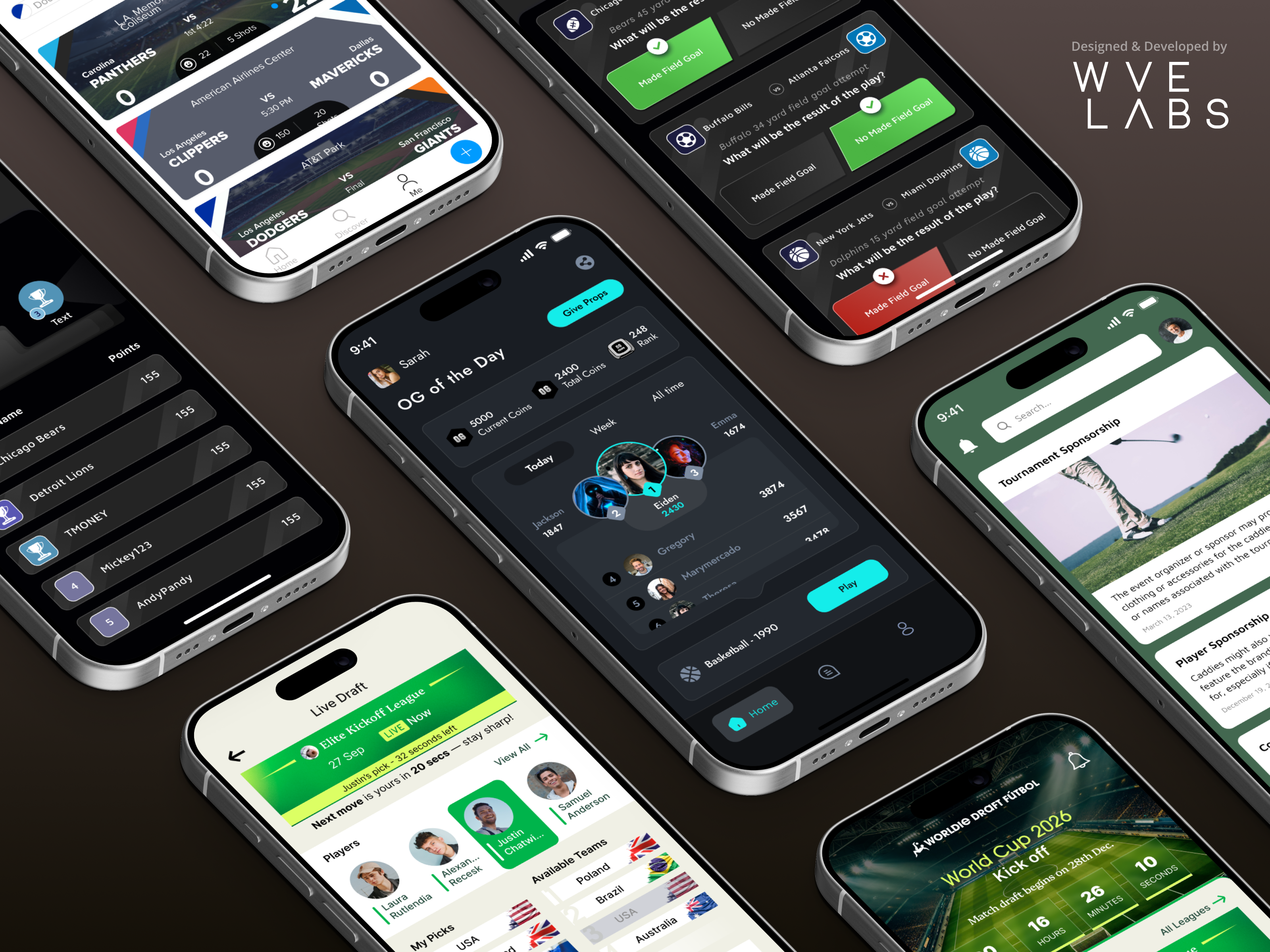
The sports industry is no longer just about the game—it's about the experience. Fans want instant updates, players want real-time stats, and organizations want innovative ways to engage their audience.