
Android Development
Mobile Trends 2026
AI in Android
Android app development in 2026 is being reshaped by AI-driven coding tools, Kotlin Multiplatform adoption, Jetpack Compose maturity, on-device AI models, foldable and wearable support, privacy-first architecture, and faster Play Store review cycles for modern apps.
Android is no longer just the world's most widely used mobile operating system. In 2026, it has become the foundation for AI-first digital experiences, enterprise mobility, connected ecosystems, and intelligent applications that learn, adapt, and automate tasks in real time.
For startups, Android remains the fastest path to reaching a global audience. For enterprises, it has evolved into a strategic platform that powers field operations, customer engagement, workforce productivity, and AI-driven decision-making.
At the same time, Google's rapid investment in artificial intelligence, on-device machine learning, and modern development frameworks has fundamentally changed how Android applications are designed, built, and maintained.
This shift creates both opportunities and challenges. Businesses that continue building Android applications using outdated architectures or legacy UI frameworks risk higher maintenance costs, slower releases, weaker security, and poor user experiences.
Meanwhile, organizations embracing modern Android development practices are delivering smarter applications that scale efficiently, perform better, and generate stronger customer engagement.
So, what exactly is changing in Android app development in 2026?
This guide explores the latest Android app development trends, explains why they matter for businesses, and provides practical insights to help startups and enterprises make informed technology decisions.
Android development has entered a new era where user expectations are no longer limited to beautiful interfaces or fast loading screens. Modern users expect applications to understand context, provide intelligent recommendations, automate repetitive actions, and deliver highly personalized experiences.
At the same time, businesses face increasing pressure to launch products faster while maintaining enterprise-grade security and performance. This has accelerated the adoption of modern Android development technologies such as AI-powered automation, Jetpack Compose, Kotlin Multiplatform, cloud-native backends, and advanced analytics.
The result is a major shift in how successful Android applications are built.
Instead of focusing only on features, development teams now prioritize:
Intelligent user experiences
AI-assisted personalization
Secure-by-design architecture
High-performance rendering
Scalable cloud infrastructure
Modular development
Continuous deployment
Data-driven optimization
Companies that embrace these practices are reducing development cycles while delivering significantly better customer experiences.
Artificial intelligence has moved beyond being an optional feature. In 2026, it has become a core component of successful Android applications across industries.
Whether it's an eCommerce platform recommending products, a healthcare application analyzing patient information, or a logistics app optimizing delivery routes, AI is now embedded directly into everyday mobile experiences.
Businesses investing in AI Android App Development are creating applications that continuously improve through user interactions rather than relying solely on predefined logic.
Traditional mobile applications require users to manually search, navigate, and perform repetitive actions. AI changes that completely. Modern Android applications can now:
Predict customer behavior
Personalize content dynamically
Automate workflows
Summarize information
Detect anomalies
Generate intelligent recommendations
Improve customer support using conversational AI
Analyze images, documents, and voice input
For enterprises, these capabilities translate into measurable business outcomes, including higher engagement, improved operational efficiency, and increased customer retention.
Imagine a retail application that recognizes a customer's browsing behavior and instantly recommends products based on previous purchases, seasonal demand, and inventory availability.
Instead of relying on static recommendation rules, the application continuously adapts to user behavior, resulting in higher conversion rates and a more personalized shopping experience.
This level of intelligence is quickly becoming an expectation rather than a competitive advantage.
Leverage the power of Artificial Intelligence to transform your mobile applications.
While predictive AI has been around for years, Generative AI in Android Apps represents one of the biggest technological shifts of the decade. Rather than simply analyzing information, generative AI creates new content in real time. Applications can now:
Generate personalized responses
Draft emails
Create reports
Summarize meetings
Produce marketing content
Translate conversations
Assist customer support teams
Build dynamic learning experiences
This dramatically changes how users interact with mobile applications. Instead of navigating dozens of menus, users simply describe what they want using natural language. The application handles the rest.
Organizations adopting generative AI into Android applications are seeing improvements in:
Customer support efficiency
Employee productivity
Knowledge management
Sales enablement
Internal operations
User engagement
The biggest advantage is reducing friction. Instead of forcing users to learn complex workflows, AI adapts the application to the user.
Many businesses rush to add AI chat functionality simply because competitors are doing it. However, successful AI integration begins by identifying real business problems, not by adding AI for the sake of innovation. The most valuable AI features solve repetitive, time-consuming, or data-heavy tasks that users already perform.
One of the most significant Android App Development Trends in 2026 is the widespread adoption of Jetpack Compose.
Traditional XML-based layouts served Android developers well for years, but they introduced unnecessary complexity, especially for modern applications requiring dynamic interfaces and frequent UI updates.
Jetpack Compose simplifies the entire UI development process through a declarative programming model.
Instead of describing how every screen should update, developers simply describe the desired interface, and Compose automatically manages rendering.
Businesses benefit because development teams can:
Build interfaces faster
Reduce maintenance costs
Deliver consistent user experiences
Improve application responsiveness
Accelerate feature releases
For startups, this means faster product launches. For enterprises, it means easier long-term maintenance and lower development costs.
| Traditional XML | Jetpack Compose |
|---|---|
| More boilerplate code | Less code |
| Slower UI iteration | Faster UI updates |
| Complex state management | Simplified state handling |
| Harder to maintain | Easier scalability |
| Longer development cycles | Faster releases |
Companies planning long-term Android investments should strongly consider adopting Jetpack Compose as part of their modernization strategy rather than continuing to build on legacy UI frameworks.
Build modern, robust, and scalable Android applications with our expert team.
Cloud-based AI has powered mobile applications for years, but 2026 marks a significant shift toward on-device intelligence. Thanks to advancements in mobile processors and optimized AI models, Android devices can now perform complex AI tasks without constantly relying on cloud servers.
For businesses, this means applications become faster, more secure, and capable of functioning even in environments with limited internet connectivity.
Instead of sending every request to the cloud, AI models can process tasks such as image recognition, voice commands, language translation, and predictive suggestions directly on the user's device.
Businesses are increasingly handling sensitive customer information, financial records, healthcare data, and confidential enterprise documents. Sending every interaction to external servers introduces additional latency, costs, and privacy concerns.
On-device AI helps solve these challenges by offering:
Faster response times
Improved privacy and compliance
Reduced cloud infrastructure costs
Better offline experiences
Lower network dependency
Enhanced battery optimization through efficient AI models
For industries like healthcare, finance, logistics, and manufacturing, this shift creates opportunities to build secure mobile experiences without compromising performance.
Consider a healthcare application that analyzes medical images. Instead of uploading every image to a remote server for processing, the application can identify abnormalities directly on the device, allowing doctors to receive instant insights while keeping sensitive patient data local.
This approach improves both speed and compliance with strict data privacy regulations.
Enterprise mobility is no longer limited to internal employee apps. Organizations now rely on Android applications to streamline operations, connect distributed teams, improve customer experiences, and automate business workflows.
As a result, Enterprise Android App Development has shifted from simple mobile enablement to a core business transformation strategy.
Modern enterprise applications integrate with:
ERP systems
CRM platforms
Inventory management software
Business intelligence dashboards
IoT devices
Cloud infrastructure
AI-powered analytics
Identity and access management systems
Rather than functioning as standalone apps, they serve as intelligent interfaces to an organization's entire digital ecosystem.
Organizations investing in enterprise Android solutions experience:
Improved operational efficiency
Faster decision-making
Better workforce collaboration
Reduced manual processes
Higher productivity
Improved customer engagement
For example, a logistics company can equip field employees with Android applications that combine GPS tracking, AI route optimization, barcode scanning, inventory management, and real-time reporting into a single mobile experience.
The result is faster deliveries, improved resource utilization, and greater customer satisfaction.
Despite these opportunities, many organizations struggle with:
Legacy infrastructure
Data silos
Poor API integration
Security vulnerabilities
Device fragmentation
Scalability concerns
Addressing these challenges requires careful architectural planning rather than simply developing another mobile application.
Transform your enterprise operations with custom, scalable Android applications.
Cybersecurity is no longer just an IT concern; it has become a business differentiator.
As Android applications process increasing amounts of financial, healthcare, and personal data, users expect stronger protection than ever before.
Businesses that prioritize Android App Security not only reduce security risks but also build long-term customer trust.
Modern Android applications are adopting security-first development practices, including:
Zero-trust architecture
Biometric authentication
Multi-factor authentication
Passkey implementation
End-to-end encryption
Secure API communication
Runtime threat detection
Secure cloud synchronization
Security is no longer treated as the final testing phase. It is integrated into every stage of development.
A single security breach can result in:
Financial losses
Regulatory penalties
Damaged customer trust
Brand reputation issues
Legal liabilities
Building secure Android applications from the beginning significantly reduces these risks while lowering future maintenance costs.
Many organizations still focus primarily on frontend security while overlooking backend APIs, authentication workflows, cloud storage, and third-party integrations. Attackers often target these overlooked components rather than the application interface itself.
Successful Android applications now incorporate:
Secure coding standards
API authentication
Token-based authorization
Regular penetration testing
Automated vulnerability scanning
Encrypted local storage
Secure CI/CD pipelines
Security should never be treated as an optional feature. It is a fundamental requirement for modern Android development.
Users have become increasingly impatient.
Research consistently shows that slow applications experience lower engagement, higher uninstall rates, and reduced customer retention.
Performance optimization has therefore become one of the most important Android Development Solutions businesses can invest in.
Every additional second of loading time affects:
User satisfaction
App Store ratings
Customer retention
Conversion rates
Revenue generation
Fast applications create a perception of quality and reliability. Slow applications create frustration, regardless of how many features they offer.
Leading Android development teams now focus on:
Efficient state management
Optimized image loading
Lazy loading techniques
Background task optimization
Reduced memory consumption
Battery-efficient processes
Modular architecture
Faster application startup
Performance optimization is no longer just about speed; it also impacts battery life, accessibility, responsiveness, and long-term scalability.
Imagine two e-commerce applications offering identical products. The first load of product pages takes two seconds. The second takes seven seconds. Even if pricing is identical, customers are far more likely to continue shopping on the faster platform.
Performance directly influences customer behavior.
Off-the-shelf software may solve short-term problems, but businesses looking to differentiate themselves increasingly invest in Custom Android app development services.
Custom applications provide:
Greater flexibility
Better scalability
Stronger integrations
Improved customer experiences
Competitive differentiation
Instead of adapting business processes to fit software limitations, organizations build applications around their unique operational requirements.
Custom Android development is particularly valuable for:
Healthcare providers
FinTech companies
Logistics businesses
Manufacturing organizations
Retail brands
SaaS platforms
Educational institutions
Each industry has unique workflows that generic applications rarely address effectively.
Custom Android applications allow organizations to:
Automate internal operations
Improve customer experiences
Integrate existing systems
Increase employee productivity
Launch innovative digital services
Although custom development requires greater upfront investment, it often delivers significantly higher long-term ROI compared to relying on multiple disconnected software products.
Ready to build a custom Android application tailored to your business needs?
For years, businesses faced a difficult decision when building mobile applications: develop separate native apps for Android and iOS or choose a cross-platform framework that often required compromises in performance and user experience.
In 2026, Kotlin Multiplatform (KMP) is changing that conversation.
Instead of forcing businesses to choose between native quality and development efficiency, Kotlin Multiplatform enables teams to share business logic, networking, data models, and domain layers across Android and iOS while still delivering fully native user interfaces.
Unlike traditional cross-platform solutions that render UI using a shared framework, KMP allows Android developers to continue using Jetpack Compose while iOS developers build interfaces with SwiftUI or UIKit. This approach preserves the native experience users expect on each platform without duplicating core application logic.
As products grow, maintaining two independent codebases becomes increasingly expensive. Every new feature, bug fix, and security update must often be implemented twice, leading to longer release cycles and higher maintenance costs.
Kotlin Multiplatform addresses these challenges by allowing teams to share up to 70–80% of application logic while keeping the user experience platform-specific.
Faster feature releases
Reduced development costs
Consistent business logic across platforms
Easier long-term maintenance
Native application performance
Simplified testing
For startups, Kotlin Multiplatform offers a practical balance between speed and quality. Instead of maintaining two separate engineering teams from day one, founders can accelerate product launches while preserving the flexibility to scale both platforms independently.
Large organizations benefit from improved code consistency, easier maintenance, and reduced technical debt across multiple product teams.
| Traditional Native Development | Kotlin Multiplatform |
|---|---|
| Separate business logic | Shared business logic |
| Duplicate maintenance | Centralized maintenance |
| Slower releases | Faster delivery cycles |
| Higher engineering costs | Lower long-term costs |
| Independent bug fixes | Shared fixes across platforms |
Businesses planning long-term digital products should evaluate Kotlin Multiplatform early in their architecture planning, especially when Android and iOS applications share similar business workflows.
A few years ago, startups competed by releasing products faster than their competitors.
In 2026, speed alone is no longer enough.
Users expect mobile applications to feel intelligent from the very first interaction. Personalized onboarding, predictive recommendations, conversational interfaces, and workflow automation have become baseline expectations rather than premium features.
As a result, Android Development for Startups is increasingly centered around AI-first product strategies.
An AI-first product isn't simply an application with a chatbot. Instead, AI influences the entire user journey.
Examples include:
Personalized onboarding experiences
Intelligent product recommendations
Automated customer support
Predictive notifications
Dynamic pricing
Smart search
AI-generated content
Voice-driven interactions
The objective is to reduce friction and help users achieve their goals with fewer manual steps.
One of the biggest mistakes founders make is attempting to build every AI capability into the first product release.
Successful startups begin with one or two high-impact AI features that solve a real user problem. Once validated, they expand AI functionality based on customer feedback and usage data. This iterative approach minimizes development costs while maximizing business value.
The next generation of Android applications won't simply respond to user input, they'll understand user context. Context-aware applications use signals such as location, device activity, time, user behavior, connected devices, and historical interactions to deliver more relevant experiences.
For example:
A fitness application automatically adjusts workout recommendations based on weather conditions and previous activity.
A travel application proactively displays boarding passes when the user arrives at the airport.
A field service application prioritizes nearby service requests based on technician location and availability.
These intelligent experiences improve usability while reducing unnecessary user interactions.
Context awareness contributes to:
Higher engagement
Increased retention
Better personalization
Improved operational efficiency
Stronger customer satisfaction
Businesses that combine AI with contextual data create applications that feel proactive instead of reactive.
Sustainability is influencing software engineering just as much as manufacturing and infrastructure.
Modern Android applications are increasingly optimized to reduce energy consumption, network usage, and unnecessary background processing.
While users may not immediately notice these optimizations, they directly impact battery life, device performance, and operational costs.
Leading development teams now focus on:
Reducing unnecessary API calls
Optimizing background services
Compressing media assets
Efficient caching strategies
Battery-aware scheduling
Lightweight application architecture
These improvements benefit both users and businesses by lowering cloud infrastructure costs while improving the overall user experience.
Following trends without understanding their business value often leads to unnecessary complexity, increased costs, and disappointing outcomes.
Here are some of the most common mistakes organizations should avoid.
Not every trend is relevant to every business. Evaluate each technology based on customer needs, operational goals, and expected return on investment rather than market hype.
Many applications launch quickly but become increasingly difficult to maintain because scalability wasn't considered during planning. Investing in modular architecture, clean code practices, and proper documentation reduces long-term technical debt.
Artificial intelligence should solve meaningful business problems. Adding AI simply because competitors have done so rarely delivers measurable value. Instead, identify repetitive tasks, customer pain points, or operational inefficiencies where AI can create tangible improvements.
Security should never be postponed until after launch. Embedding secure development practices throughout the development lifecycle significantly reduces future risks and maintenance costs.
Successful Android products evolve continuously. Performance monitoring, user analytics, feature experimentation, and iterative improvements are essential for long-term success.
See how we've delivered custom Android solutions across healthcare, fintech, retail, logistics, and other industries.
Whether you're launching your first mobile product or modernizing an enterprise application, the most successful Android projects share several characteristics.
Every feature should contribute to a measurable business objective, whether that's improving customer engagement, reducing operational costs, increasing revenue, or enhancing productivity.
Applications often evolve far beyond their original scope. Designing modular architectures from the beginning makes future expansion significantly easier and less expensive.
Technology alone doesn't determine product success. Fast performance, intuitive navigation, accessibility, and thoughtful interactions have a greater impact on user retention than simply offering more features.
Identify workflows where AI genuinely improves efficiency or personalization. Start small, measure impact, and expand capabilities based on real user behavior rather than assumptions.
Modern Android development involves much more than writing code. It requires expertise in architecture, cloud infrastructure, security, AI integration, performance optimization, DevOps, and long-term product strategy.
Working with an experienced development partner helps reduce technical risks, accelerate delivery, and ensure your application is built for future growth.
Looking ahead, Android development will continue evolving alongside advancements in artificial intelligence, edge computing, wearable technology, mixed reality, connected vehicles, and IoT ecosystems.
Applications will become increasingly autonomous, capable of understanding user intent, predicting needs, and interacting naturally through voice, vision, and multimodal interfaces.
Businesses that invest today in flexible architectures, AI-ready platforms, and modern development practices will be better positioned to adapt as these technologies mature.
Rather than asking, "Which Android trends should we follow?", organizations should ask:
"Which technologies will create lasting value for our customers over the next five years?"
That perspective will separate market leaders from businesses simply trying to keep up.
1. AI-Powered Android App Development Is Becoming the New Standard
5. Enterprise Android App Development Is Becoming More Strategic
7. Android App Performance Is Directly Impacting Business Growth
8. Custom Android App Development Is Replacing Generic Solutions
12. Sustainability and Efficient Development Are Becoming Business Priorities
Common Mistakes Businesses Make When Adopting Android Trends
Let's turn your vision into reality with our expert Android development team.
Contact UsOur expert developers are ready to turn your vision into reality using the latest Android innovations, from AI-powered features to scalable architectures.
The biggest trends include AI-powered apps, Generative AI, Jetpack Compose, Kotlin Multiplatform, on-device AI, stronger security, and enterprise mobility solutions.
AI improves personalization, automates tasks, enhances customer experiences, and helps businesses make smarter, data-driven decisions.
Generative AI enables Android apps to create content, answer questions, summarize information, and automate user interactions using natural language.
Yes. Jetpack Compose simplifies UI development, reduces code, improves performance, and speeds up feature delivery compared to XML.
Yes. Kotlin remains Google's preferred language because it's safer, more concise, and supports modern Android development.
Use secure authentication, encrypt sensitive data, protect APIs, perform regular security testing, and keep dependencies up to date.
Look for proven experience, modern technology expertise, transparent processes, strong case studies, and post-launch support.
Costs vary based on app complexity, features, integrations, and team location, typically ranging from $20,000 to $300,000+.
Android offers a large global user base, faster market reach, flexible development, and lower customer acquisition opportunities in many regions.
The future includes AI-first experiences, on-device intelligence, wearable integrations, foldable devices, and more personalized mobile applications.

Android app development cost ranges from $15K to $300K+. See real pricing by complexity, region, and features - plus how to budget smart.
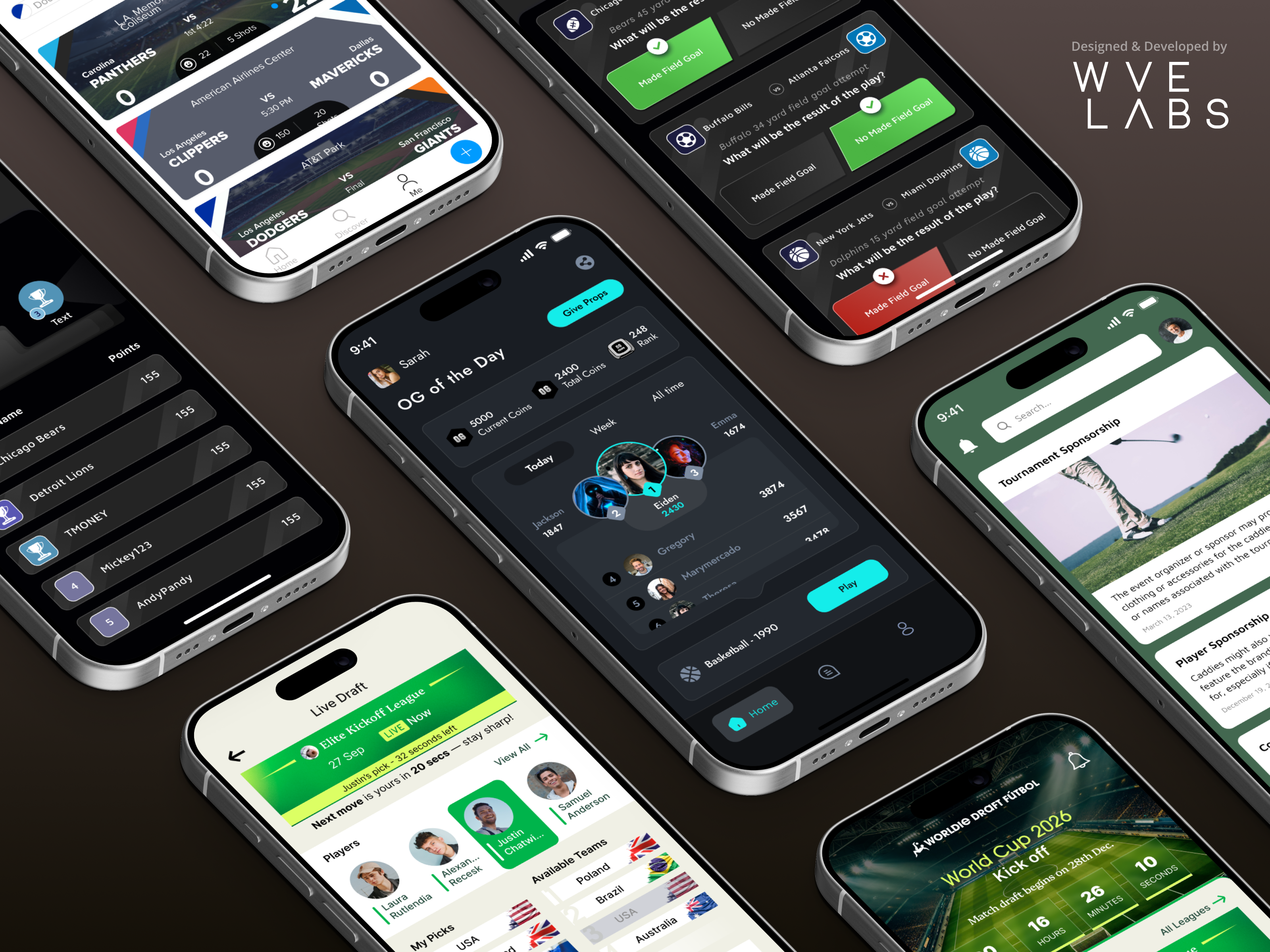
The sports industry is no longer just about the game—it’s about the experience. Fans want instant updates, players want real-time stats, and organizations want innovative ways to engage their audience.

In the ever-evolving mobile app market, monetization strategies play a crucial role in generating revenue while maintaining a seamless user experience.