
App Development
Hiring Guide
Mobile Agency
A reliable mobile app development company should understand your business objectives, have experience with the type of product you're building, follow a clear development process, and support the application after launch. Its portfolio should also show real project experience rather than just attractive screenshots.
Choosing a mobile app development company is one of the most important decisions you'll make when turning an app idea into a working product. The right development partner can help you shape the concept, choose the right technology, build a reliable application, and prepare it for long-term growth. The wrong choice can lead to missed deadlines, unexpected costs, technical problems, and an app that doesn't meet user expectations.
With so many app development companies offering similar services, comparing them can be difficult. A polished website or an impressive list of technologies doesn't necessarily tell you whether a company is the right fit for your project. You need to look beyond the sales pitch.
A reliable mobile app development company should understand your business objectives, have experience with the type of product you're building, follow a clear development process, and support the application after launch. Its portfolio should also show real project experience rather than just attractive screenshots.
Whether you're building a startup MVP, an e-commerce application, a marketplace, an enterprise product, or an AI-powered mobile app, this guide will help you understand what to look for in an app development company, how to evaluate its portfolio, what questions to ask before hiring, and how to determine whether a local or remote partner is right for your project.
A mobile app development company helps businesses turn an idea, business requirement, or existing product into a functional mobile application. Depending on the company and project scope, its role can extend well beyond writing code.
A full-service development partner may be involved from the initial product discussion through design, development, testing, launch, and ongoing maintenance.
Before development begins, the team should understand what you're trying to achieve. This can include defining the target users, core features, business requirements, technical constraints, and MVP scope.
This stage helps prevent unnecessary features from consuming time and budget before the core product has been validated.
The design team turns requirements into user flows, wireframes, prototypes, and final interfaces. Good mobile UX focuses on making the application easy to understand and use, rather than simply making individual screens look attractive.
Developers build the application for the required platforms, such as iOS, Android, or both. Depending on the project, an app development company may use native technologies such as Swift and Kotlin or cross-platform frameworks such as Flutter and React Native.
Many mobile applications depend on a backend for authentication, databases, business logic, payments, notifications, analytics, and third-party integrations. A development company may therefore handle both the mobile application and the supporting backend infrastructure.
Testing helps identify functional issues, crashes, performance problems, compatibility issues, and usability concerns before the application reaches users. A professional development process should include testing throughout development rather than leaving it until the final stage.
The development team can also help prepare and submit the application to the Apple App Store and Google Play, configure production environments, and address platform-specific requirements.
Launching the application is not the end of development. Operating system updates, security issues, changing APIs, performance requirements, and new product features can all require ongoing work.
This is why it's important to understand what support an app development company provides after the initial launch.
A mobile app development company can build applications for almost any business model, from a simple MVP to a complex platform with thousands of users. The development approach depends on what the app needs to accomplish, who will use it, and how it needs to connect with other systems. Understanding the type of application you're building can make it easier to define your requirements and find a development partner with relevant experience.
Consumer apps are designed for direct interaction with customers or communities. They can include social platforms, dating apps, fitness applications, entertainment products, lifestyle apps, and community-based applications.
These products often require features such as:
User registration and profiles
Social login
Push notifications
In-app messaging
Location services
Media uploads
Payments and subscriptions
Personalized content
Because user experience is often a major factor in adoption, the development company should have strong mobile UI/UX and performance experience.
E-commerce applications allow customers to browse products, place orders, make payments, and track purchases. Marketplace applications add another layer by supporting multiple sellers or service providers.
Common features include:
Product catalogs
Search and filtering
Shopping carts
Payment gateways
Order management
Reviews and ratings
Vendor accounts
Notifications
Delivery or order tracking
If your application involves multiple user types, such as customers, sellers, and administrators, make sure the app development company has experience designing systems with different roles and permissions.
On-demand applications connect users with services, products, or professionals. Examples include delivery, transportation, home services, appointments, and booking platforms.
These applications may require real-time functionality such as:
Location tracking
Availability management
Booking systems
Real-time notifications
Online payments
Chat
Scheduling
Status updates
The backend architecture becomes particularly important when multiple users need to interact with the system at the same time.
Businesses often use mobile applications to improve internal workflows, manage operations, or provide services to customers.
Examples include:
Employee applications
CRM applications
Field service apps
Inventory management
Sales applications
Workflow automation
Customer portals
Internal communication tools
Enterprise applications may also require integrations with existing business software, identity systems, databases, and APIs. In these projects, your development partner needs to understand the wider technology environment rather than focusing only on the mobile interface.
AI is increasingly becoming part of mobile products rather than a standalone feature.
A mobile application can use AI for:
Conversational assistants
Personalized recommendations
Intelligent search
Document analysis
Content generation
Image or voice processing
Predictive features
Workflow automation
AI development can introduce additional considerations around model selection, API usage, data privacy, latency, infrastructure, and ongoing costs. If AI is central to your product, look for a mobile app development company with both mobile engineering and AI integration experience.
Different app categories come with different technical and business requirements. This quick comparison can help you identify what your project may need before approaching an app development company.
| App Type | Common Examples | Typical Features | Key Development Considerations |
|---|---|---|---|
| Consumer Apps | Social, dating, fitness, community | Profiles, messaging, notifications, media, personalization | UX, performance, engagement, scalability |
| E-commerce Apps | Online stores, retail apps | Product catalog, search, cart, payments, orders | Payments, security, inventory, integrations |
| Marketplace Apps | Multi-vendor platforms, service marketplaces | Buyer/seller accounts, listings, payments, reviews | Multiple roles, transactions, moderation, scalability |
| On-Demand Apps | Delivery, transportation, home services | Booking, location tracking, chat, payments, status updates | Real-time data, maps, availability, backend performance |
| Booking Apps | Healthcare, restaurants, appointments, events | Scheduling, availability, reservations, reminders | Calendar logic, notifications, integrations |
| Business Apps | CRM, sales, field service | Dashboards, workflows, reports, user roles | Security, APIs, enterprise integrations |
| Enterprise Apps | Internal operations, employee platforms | Authentication, workflows, data access, automation | Scalability, access control, compliance, infrastructure |
| AI-Powered Apps | AI assistants, smart search, recommendations | AI chat, generation, analysis, personalization | Model selection, data privacy, latency, AI infrastructure |
The purpose of this table isn't to put every app into a single category. Many modern applications combine several of these models. For example, a marketplace may also include booking, messaging, payments, location tracking, and AI-powered recommendations.
One of the first technical decisions you'll need to make is whether to develop your application natively for each platform or use a cross-platform framework.
Native applications are built specifically for a particular operating system. For iOS, development commonly uses technologies such as Swift and SwiftUI. Android applications can be built using Kotlin and Jetpack Compose.
Native development can be a good fit when your application requires deep platform integration, highly customized user experiences, or platform-specific capabilities.
Cross-platform frameworks allow developers to share a significant portion of the codebase across iOS and Android.
Popular approaches include:
Flutter
React Native
This can reduce duplicated development work and make it easier to maintain a shared product experience across platforms. However, the suitability of cross-platform development depends on the application's requirements and the platform features it needs.
There isn't one approach that is right for every application. A good app development company should first understand your product requirements and then explain the trade-offs between native and cross-platform development.
Consider factors such as:
Required platform-specific features
Performance requirements
Development timeline
Budget
Team expertise
Long-term maintenance
Third-party SDK compatibility
Expected scale
The technology decision should support the product rather than determine the product.
One common mistake when planning a mobile application is focusing entirely on what users see on their phones. A modern mobile product may depend on a backend for authentication, databases, APIs, payments, notifications, analytics, file storage, business logic, and integrations.
For example, a marketplace application may have:
Mobile App → API → Backend → Database
while also connecting to:
Payment Gateway + Push Notifications + Analytics + Cloud Infrastructure + Third-Party APIs
This means you should evaluate whether a mobile app development company can handle the complete technical ecosystem, rather than simply asking whether it can build iOS and Android screens. A strong development partner should be able to explain how the mobile application, backend, APIs, data, integrations, and infrastructure will work together.
Finding a company that can build an app is relatively easy. Finding one that understands your product, communicates clearly, and can support the application after launch requires more research. Instead of comparing companies only by price or the number of technologies listed on their websites, evaluate them across several practical areas.
Start with the company's previous work. Look for projects that are similar to yours in terms of industry, functionality, users, or technical complexity.
For example, if you're building a marketplace, experience with simple informational apps may not tell you much about the company's ability to handle multiple user roles, payments, listings, reviews, and transactions.
Relevant experience doesn't mean the company must have built the same app. What matters is whether it has solved comparable technical and product problems.
A capable app development company should be able to explain its technology choices rather than simply listing frameworks on a website.
Depending on your project, this could include:
iOS and Android development
Flutter or React Native
Backend and API development
Cloud infrastructure
Payment integrations
Real-time communication
AI integrations
Analytics
Third-party APIs
Ask why a particular technology is being recommended and what its implications are for performance, development time, maintenance, and future growth.
A reliable development process should be clearly defined.
A typical project may move through:
Discovery → Planning → UI/UX Design → Development → Testing → Launch → Maintenance
Ask how requirements are documented, how progress is reported, how feedback is handled, and how changes to the scope are managed. A clear process reduces misunderstandings and gives both sides a better understanding of what happens at each stage.
Your mobile application may depend on much more than the app installed on a user's phone.
Ask whether the company can handle:
Backend development
APIs
Databases
Authentication
Payment systems
Admin panels
Cloud infrastructure
Analytics
Third-party integrations
A development partner that understands the complete product architecture can help prevent problems that might otherwise appear after launch.
Testing shouldn't be treated as the final step before release. Ask how the team handles functional testing, device compatibility, performance, API testing, and regression testing. Security is equally important, particularly for applications that handle payments, personal information, business data, or user authentication.
The company should be able to explain how sensitive information, authentication credentials, APIs, and application data are protected.
An application usually needs ongoing attention after it reaches users. Operating system updates, new devices, security patches, third-party API changes, performance improvements, and new features can all require additional development.
Before signing a contract, clarify whether the company provides maintenance and support, what is included, and how additional work is billed.
Good technical skills don't compensate for poor communication.
Find out:
Who will manage your project?
How often will you receive updates?
Which communication tools will be used?
Who owns the source code?
How are project files and credentials managed?
What happens when the project is completed?
These details may seem minor at the beginning but can become important during development and after launch.
Talk to our team about your app idea and get honest guidance on scope, technology, and cost before you commit to a developer.
A company's portfolio can tell you a lot about its experience, but only if you know what to look for. Many development companies showcase polished app screenshots, but screenshots alone don't tell you how well the team handled the actual product, technical challenges, or business requirements.
When reviewing a mobile app development company portfolio, look beyond visual design and examine the story behind each project.
Start by looking for projects similar to what you want to build. If you're developing an e-commerce app, for example, look for experience with product catalogs, payments, orders, customer accounts, and integrations.
If you're building a social platform, look for features such as messaging, profiles, notifications, media, and user-generated content. Relevant experience can give you a better idea of whether the team understands the challenges your project may involve.
A portfolio should make it reasonably clear what the development company was responsible for.
Did the team handle:
Product strategy?
UI/UX design?
Mobile development?
Backend development?
API integrations?
Testing?
Deployment?
Ongoing maintenance?
This distinction matters because a company displaying an application in its portfolio may not necessarily have built the entire product.
A strong case study should explain more than the final interface.
Useful portfolio information can include:
The client's business problem
Project objectives
Key features
Technology stack
Development challenges
The solution implemented
Results or measurable outcomes
This gives you a better understanding of how the company approaches real-world development.
If the application is publicly available, check it yourself.
Look at its:
User experience
Performance
Navigation
Reviews
Ratings
Update history
Overall functionality
You don't need to assume that every issue in a live application was caused by the development company, but examining the product can provide additional context beyond a portfolio page.
Be cautious when a portfolio:
Contains only screenshots with no project details
Doesn't explain the company's role
Has no examples relevant to your project
Makes broad claims without supporting information
Shows dozens of projects but provides little detail about any of them
A smaller portfolio with detailed case studies can sometimes tell you more than a long list of projects with minimal context.
A strong portfolio is useful, but it shouldn't be your only selection criterion.
You should also evaluate the company's development process, communication, technical expertise, security practices, pricing structure, and post-launch support.
The goal isn't to find the company with the most impressive screenshots. It's to find a development partner whose previous experience and capabilities align with what your product actually needs.
Explore real projects we've built, from MVPs to AI-powered platforms, and see how we approach product challenges like yours.
The cost of hiring a mobile app development company can vary significantly. There isn't a single price that applies to every application because the final cost depends on what you're building, how complex it is, which platforms you need, and how much backend infrastructure is required.
A basic MVP with a few core features can require far less development work than a marketplace, social platform, or enterprise application with multiple integrations.
Several factors have the biggest impact on the overall budget.
App complexity: More features, user roles, workflows, and integrations generally require more development time.
Number of platforms: Building for both iOS and Android can require additional work, although cross-platform development may allow teams to share part of the codebase.
UI/UX design: Custom interfaces, complex user flows, animations, and interactive experiences can increase design and development effort.
Backend development: Applications requiring databases, APIs, authentication, admin panels, real-time functionality, or complex business logic need additional backend work.
Third-party integrations: Payment gateways, maps, analytics, social login, CRM systems, AI services, and other external APIs can add development and testing requirements.
Security and compliance: Applications handling sensitive information or financial transactions may require additional security controls, testing, and infrastructure.
Post-launch requirements: Maintenance, monitoring, operating system updates, bug fixes, and new features should also be considered when planning the total cost of ownership.
Instead of focusing on one universal price, consider your application in terms of scope:
| App Complexity | Typical Characteristics | Relative Development Effort |
|---|---|---|
| Simple MVP | Core features, basic backend, limited integrations | Lower |
| Business App | Multiple screens, user accounts, APIs, admin functionality | Moderate |
| Advanced App | Payments, real-time features, complex workflows, multiple integrations | High |
| Enterprise Platform | Large-scale infrastructure, advanced security, multiple systems and user roles | Very high |
These categories are more useful for initial planning than a fixed price because two applications in the same category can still have very different requirements.
The lowest quote isn't necessarily the lowest overall cost.
When comparing proposals, check whether each company has included the same scope. One proposal may include UI/UX design, backend development, testing, deployment, and maintenance, while another may cover only mobile development.
Ask each app development company to clearly define:
Features and deliverables
Platforms
Technology stack
UI/UX scope
Backend and API work
Testing
Deployment
Project timeline
Maintenance and support
What happens when requirements change
A detailed proposal makes it much easier to compare companies fairly and identify potential additional costs before development begins.
Get a clear, no-obligation quote based on your app's features, platforms, and complexity, no vague price ranges.
Once you've shortlisted a few development companies, don't make your decision based only on a proposal or sales call. The questions you ask before starting the project can reveal how well a company understands your requirements and how it manages development work.
Here are some practical questions to ask.
Ask for examples that are relevant to your industry, features, or technical requirements. A company doesn't need to have built the same product, but experience with similar challenges can be valuable.
Find out who will actually handle the work.
Ask about:
Developers
UI/UX designers
QA engineers
Project managers
Backend developers
Technical leads
This helps you understand whether the people presenting the project are the same people who will develop it.
Don't simply ask which framework the company prefers. Ask why it recommends a particular approach for your project.
The answer should consider your requirements, platforms, performance needs, integrations, budget, and long-term maintenance.
If your application requires accounts, payments, databases, APIs, notifications, or business logic, clarify whether backend development is included. A mobile app is often only one part of the overall product.
Ask what types of testing are included and when testing happens. A mature process may include functional testing, API testing, device testing, regression testing, performance testing, and release testing depending on the project.
Clarify:
Source-code ownership
Repository access
Intellectual property rights
Credentials
Data storage
Security practices
Third-party services
These details should be established before development begins rather than after the project is completed.
Ask whether the company provides ongoing maintenance and what that support includes.
You should understand how the team handles:
Bugs
Operating system updates
Security fixes
Performance issues
Third-party API changes
New features
Ask how often you'll receive updates and how you'll review completed work. A development company may use project management tools, sprint reviews, demos, progress reports, or regular meetings to keep everyone aligned.
Requirements often change during development. Ask how additional features or changes are estimated, approved, and added to the project. Having this process defined upfront can prevent disagreements later.
Before signing, make sure the proposal clearly defines:
Features
Deliverables
Platforms
Timeline
Development stages
Payment structure
Testing
Deployment
Support
Ownership
The more clearly the scope is documented, the easier it is for both you and the app development company to work toward the same outcome.
Choosing a development partner can become expensive and difficult to change once a project is underway. Avoiding a few common mistakes at the beginning can save time, money, and unnecessary rework later.
Price matters, but the cheapest proposal may not provide the same scope, quality, or level of support as a more detailed proposal. Compare what each company is actually offering rather than comparing the final numbers alone.
A visually impressive portfolio doesn't necessarily demonstrate strong engineering capabilities. Look for information about the project's requirements, technical challenges, development process, and outcomes.
Trying to build every possible feature in the first version can increase development time and cost. Define the core problem your application needs to solve and prioritize the features necessary to launch and validate the product.
It's easy to start with a framework or programming language because it is popular. However, the technology should follow the product requirements. Your development partner should explain why a particular technology or architecture is appropriate for your application.
A mobile application is often connected to APIs, databases, authentication systems, payment services, cloud infrastructure, and other components. Planning only the mobile interface can create architectural problems later.
Before development starts, clarify who owns the source code, designs, documentation, intellectual property, and project accounts. These details should be part of the agreement from the beginning.
Publishing an application is only the beginning of its lifecycle. Bugs, operating system changes, security updates, performance improvements, and new features may require ongoing development. Discuss maintenance and support before choosing your development partner.
Unclear communication can cause delays and misunderstandings even when the technical team is capable. Agree on communication channels, meeting schedules, progress updates, approval processes, and who is responsible for decisions before development begins.
Choosing a development partner means looking beyond the ability to write mobile application code. You need a team that can understand the product, work through technical requirements, and support the application beyond its initial launch.
Wve Labs provides mobile app development services for businesses and startups, covering different stages of the product lifecycle.
Our capabilities include:
iOS app development
Android app development
Cross-platform development
UI/UX design
Backend and API development
Third-party integrations
Cloud deployment
AI-powered application development
App testing and maintenance
The development approach can be tailored to the project's requirements, whether you're validating an MVP, extending an existing application, or building a more complex digital product.
Before selecting any mobile app development company, it's worth reviewing its portfolio, understanding its development process, discussing technical requirements, and clarifying what happens after launch.
If you're planning a mobile application, explore Wve Labs' mobile app development services to learn more about our capabilities and approach.
Choosing a mobile app development company is about more than finding a team that can build an application. The right development partner should understand your product goals, provide relevant technical expertise, communicate clearly, and have a process for taking the application from concept to launch and beyond.
Before deciding, review the company's portfolio, compare proposals based on the same scope, ask about technology and security, clarify ownership, and understand what support is available after launch.
Whether you're searching for a local app development company near me or considering a remote development partner, focus on the factors that will have the biggest impact on your product: experience, technical capability, communication, development process, and long-term support.
A well-defined project and the right development partner can give your mobile application a much stronger foundation for launch and future growth.
Let's turn your vision into reality with our expert Android development team.
Contact UsTell us about your project and get a free consultation with our mobile app development team — no commitment required.
A mobile app development company helps businesses plan, design, develop, test, launch, and maintain mobile applications. Depending on the project, the team may also handle backend development, APIs, cloud infrastructure, integrations, and ongoing support.
Start by reviewing relevant experience and the company's portfolio. Then evaluate its technical expertise, development process, communication, security practices, pricing, and post-launch support. It's also useful to ask whether the team has worked on projects with similar requirements or technical challenges.
The cost depends on factors such as app complexity, number of platforms, UI/UX requirements, backend development, integrations, security requirements, and ongoing maintenance. A simple MVP will generally require less development effort than a complex marketplace, enterprise platform, or AI-powered application.
Not necessarily. A local company can make in-person collaboration easier, but remote development can provide access to a broader range of technical expertise. When comparing an app development company near me with a remote provider, consider experience, portfolio, communication, technical capabilities, pricing, and support rather than location alone.
Look beyond screenshots. Review projects that are relevant to your industry or requirements and check what the company actually contributed. Look for information about the business problem, features, technologies, technical challenges, outcomes, and the company's role in the project.
It depends on your application's requirements. Native development can be useful for applications that require extensive platform-specific functionality, while cross-platform frameworks let teams share more code between iOS and Android. Your development partner should recommend an approach based on your product rather than choosing a technology simply because it is popular.
There is no universal timeline. A basic MVP may require significantly less time than an application with complex workflows, payments, real-time functionality, multiple integrations, or advanced backend requirements. The development timeline should be estimated after the project's scope and requirements are clearly defined.

Android app development cost ranges from $15K to $300K+. See real pricing by complexity, region, and features - plus how to budget smart.
Discover the latest Android App Development Trends 2026, from AI-powered apps and Jetpack Compose to enterprise mobility, security, and performance best practices.
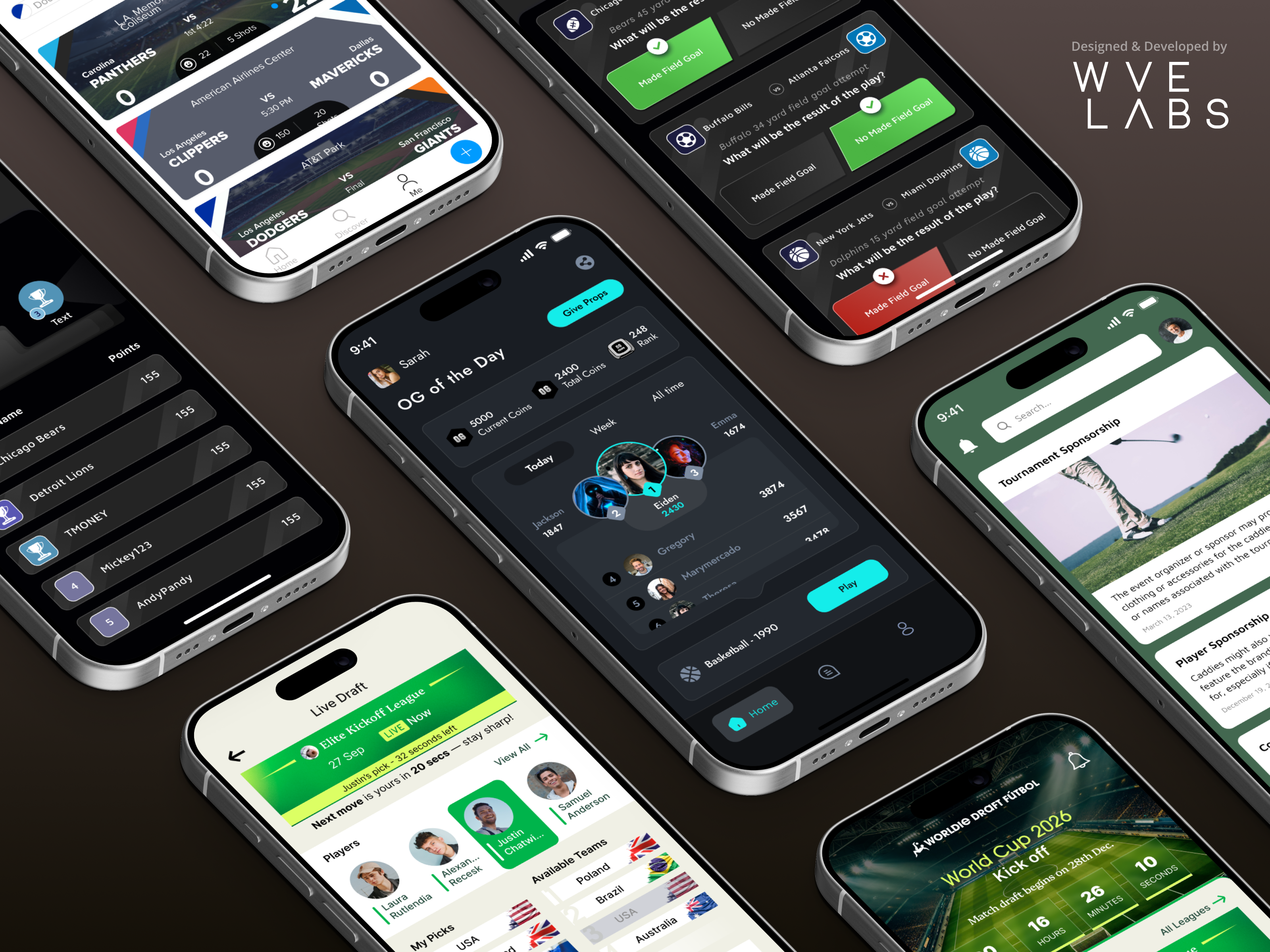
The sports industry is no longer just about the game—it’s about the experience. Fans want instant updates, players want real-time stats, and organizations want innovative ways to engage their audience.